
How to Import a Car from Japan (2026 Complete Guide to Success)
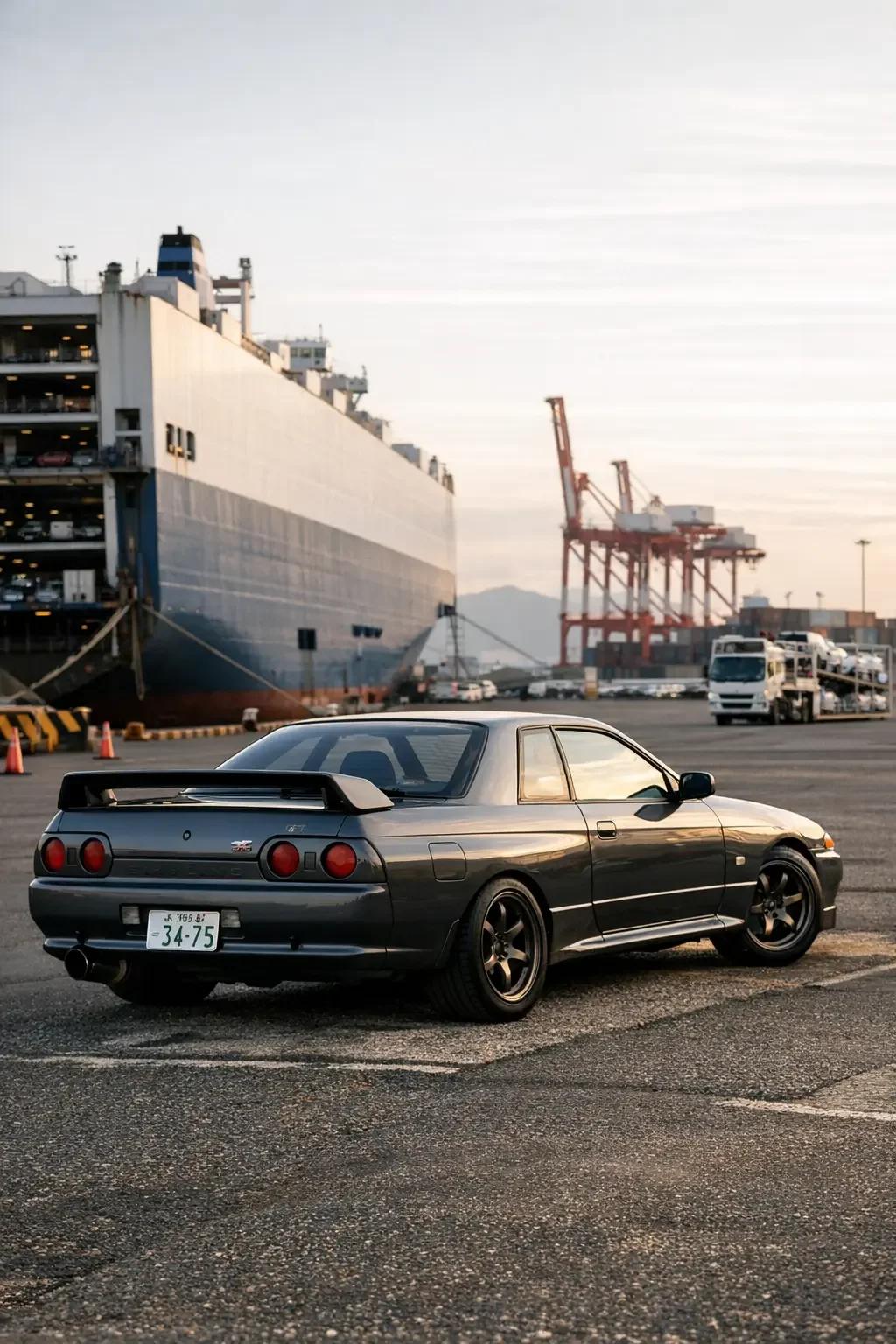
Everything you need to know — costs, timelines, risks, and how to avoid expensive mistakes.
Importing a car from Japan in 2025 is one of the smartest ways to secure a rust‑free, well‑maintained, and often better‑spec’d vehicle than anything available in the UK. But the process can feel overwhelming if you’ve never done it before — auctions, exporters, duty, VAT, shipping, inspections, timelines… it’s a lot.
This guide breaks everything down into a clear, structured, step‑by‑step process, based on real‑world experience sourcing vehicles directly from Japan.
Whether you’re after a Mazda MX‑5, a Nissan Skyline GT‑R, a Toyota Crown, or a kei car, this guide will give you the confidence to import safely and avoid the common traps.
🌏 1. Why Import From Japan?
Japan remains the best source of high‑quality used vehicles for several reasons:
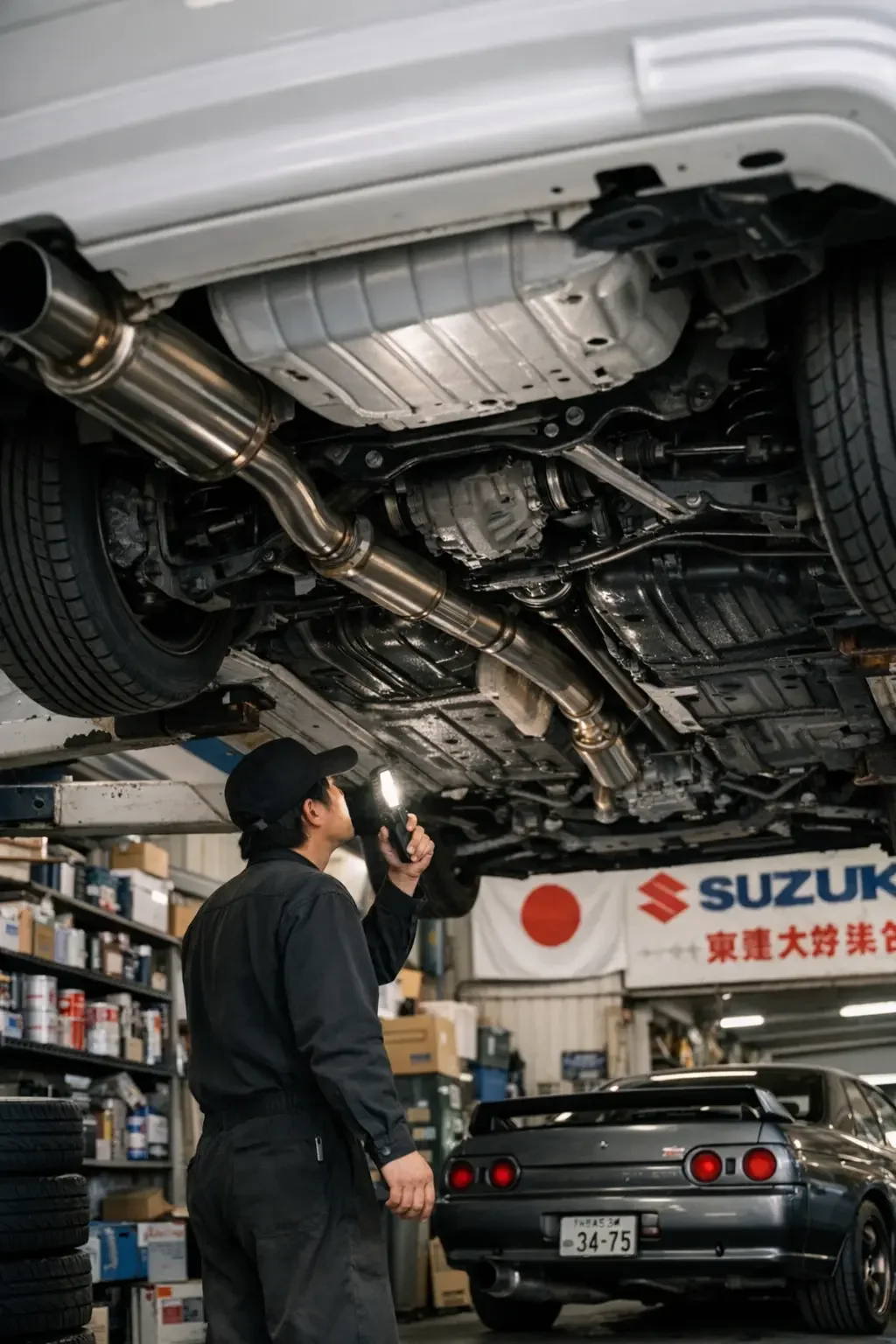
Minimal Rust
Japan uses far less road salt than the UK, and many regions have mild winters. Result: 90%+ of Japanese cars have clean undersides.
Accurate Mileage
Mileage fraud is rare due to strict inspections (Shaken) and digital records.
Better Condition
Japanese owners maintain their cars meticulously. Servicing is frequent, and storage conditions are excellent.
Rare Models & Specs
Many iconic JDM models were never sold in the UK, or came with higher specs in Japan.
Transparent Grading System
Auction sheets provide honest, structured condition reports.
🧭 2. The Import Process (Full Overview)
Here’s the complete journey from Japan → UK:
Define your requirements
Pay a finder’s fee (if using a sourcing service)
Shortlist vehicles
Exporter inspection & translation
Purchase the vehicle
Transport to port
Shipping to the UK
UK arrival, duty & VAT
Customs clearance
MOT, registration & plates
Delivery to your address
Each stage is explained in detail below.
🎯 3. Step 1 — Define Your Requirements
Before searching, you need clarity on:
Budget
Mileage range
Colour preferences
Transmission
Engine size
Non‑negotiables (rust‑free, accident‑free, grade minimum)
Intended use (daily, weekend, collector, investment)
The clearer you are, the faster and more accurate the sourcing process becomes.
🤝 4. Step 2 — Choose a Sourcing Partner
Importing alone is possible — but risky. A good sourcing partner:
Filters out bad cars
Provides translations
Avoids auction traps
Works with trusted exporters
Saves you from expensive mistakes
Touge Imports acts solely as a sourcing intermediary. We do not buy, hold, or store vehicles. All payments are made directly to the exporter for full transparency.
📋 5. Step 3 — Shortlisting Vehicles
Once your criteria are set, your sourcing partner or exporter will provide:
Photos
Auction sheets
Condition reports
Market comparisons
Estimated landed costs
This is where you begin narrowing down your options.
📝 6. Step 4 — Understanding Auction Sheets
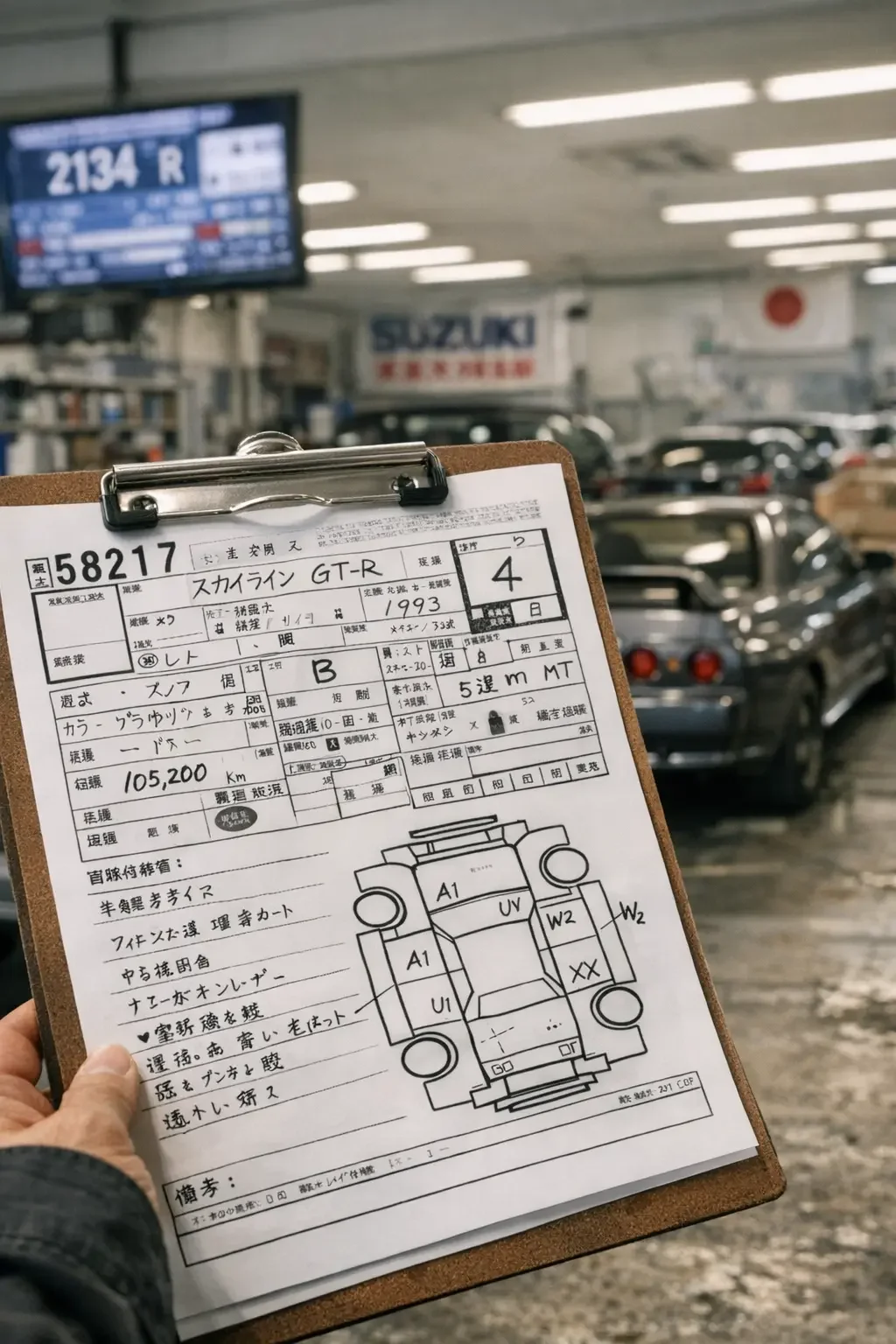
Auction sheets are the backbone of Japanese vehicle transparency.
They include:
Mileage
Condition grade (0–5, R, RA)
Interior grade (A–D)
Accident history
Rust notes
Panel repairs
Scratches, dents, paintwork
Engine comments
Underside notes
A good exporter will translate and explain everything clearly.
💴 7. Step 5 — Purchasing the Vehicle
Once you approve a car:
The exporter invoices you
You pay directly (usually via bank transfer)
The vehicle is secured
Export preparation begins
Important: Banks may block international transfers — always check limits and fees.
🚚 8. Step 6 — Transport to Port & Export Prep
The exporter handles:
Transport to port
De-registration
Export paperwork
Cleaning (mandatory for some ports)
Booking shipping
This stage typically takes 1–2 weeks.
🌊 9. Step 7 — Shipping to the UK
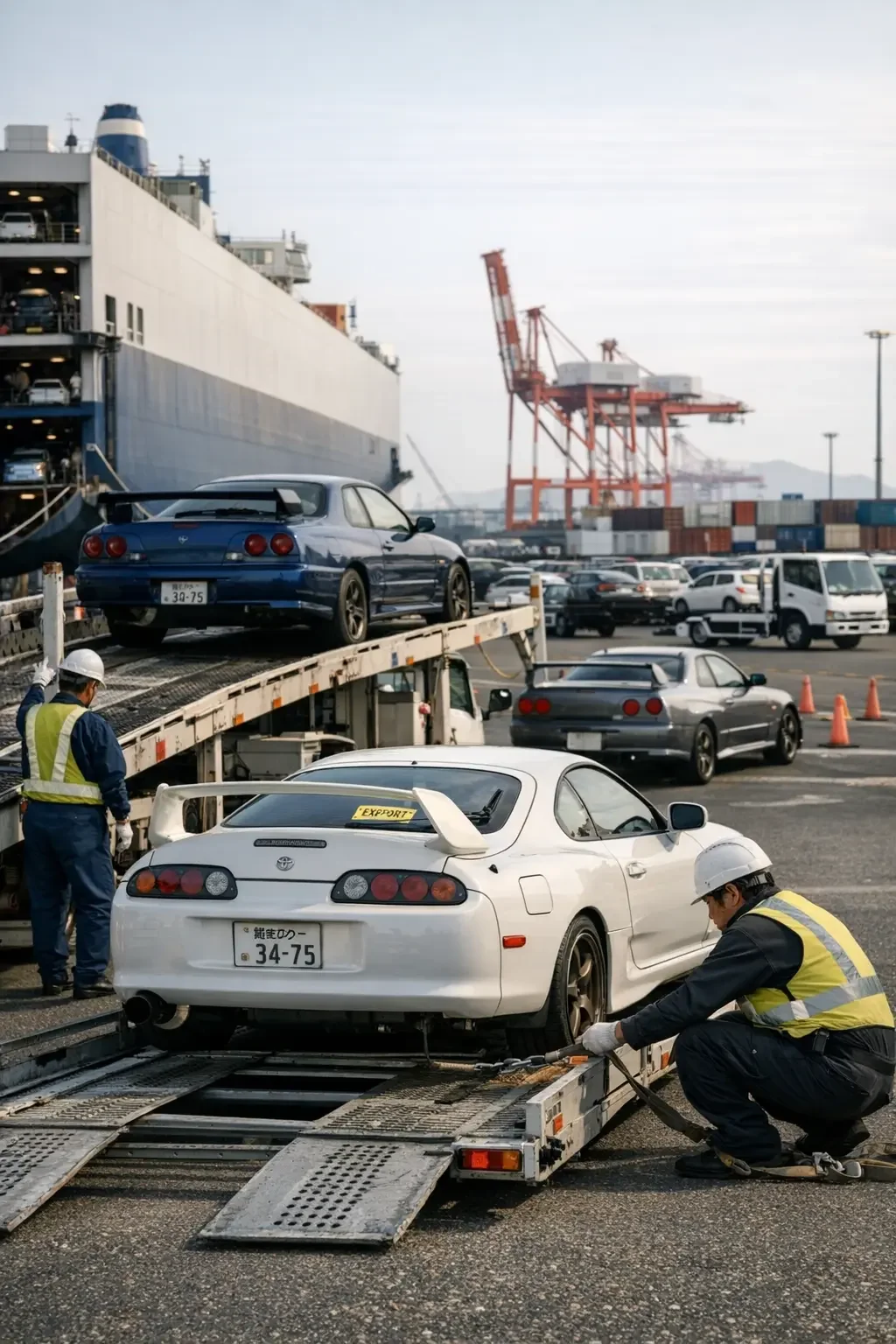
Two main shipping methods:
RoRo (Roll‑on Roll‑off)
Cheapest
Most common
Vehicle is driven on/off the ship
Container Shipping
More expensive
More secure
Ideal for high‑value cars
Transit time: 4–7 weeks depending on port.
🇬🇧 10. Step 8 — UK Arrival, Duty & VAT
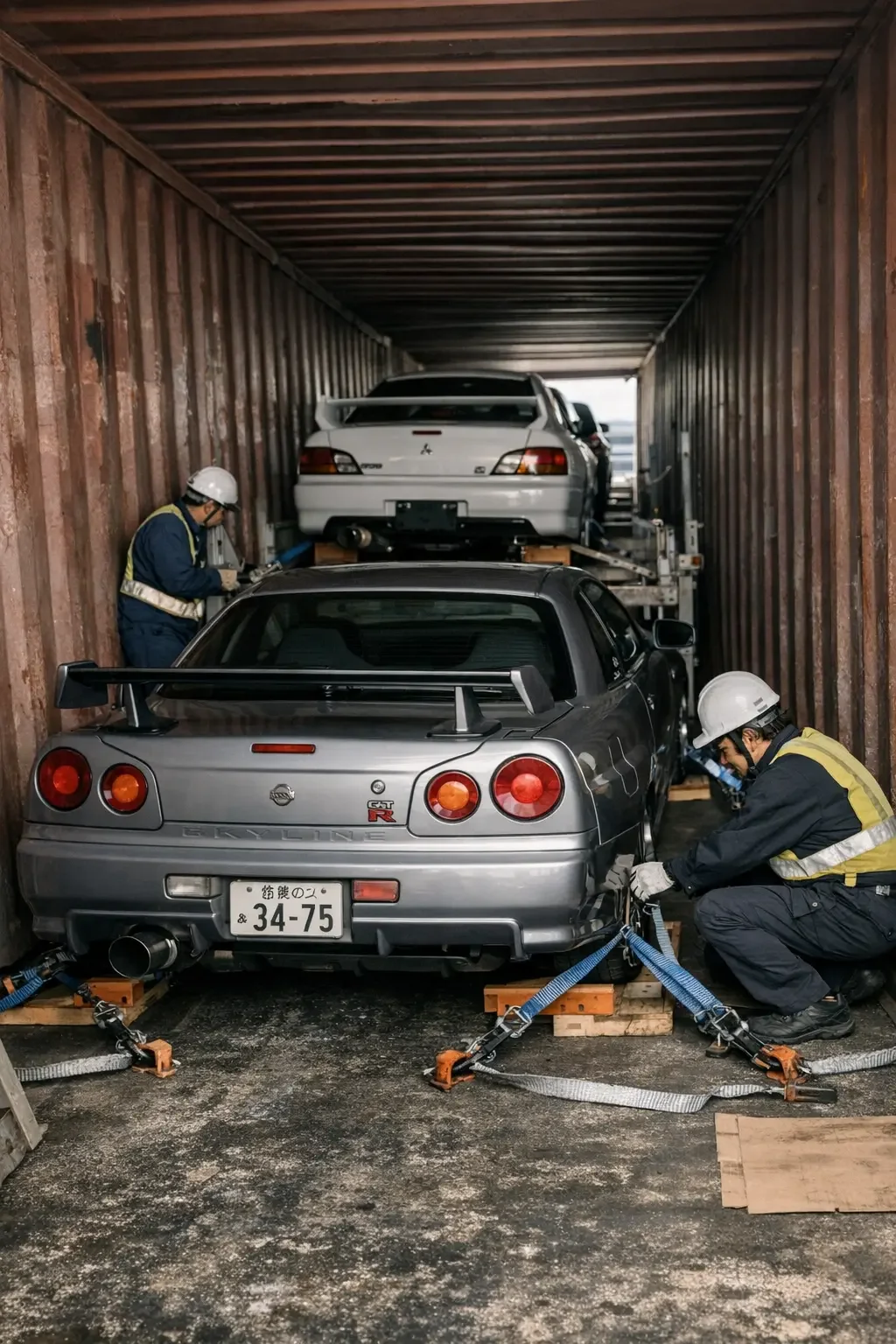
When the car lands, you must pay:
10% import duty
20% VAT (calculated after duty)
Port fees
Customs agent fees
For most cars, UK landed costs total £2,500–£4,000 depending on value and port.
📦 11. Step 9 — Customs Clearance
Your customs agent handles:
NOVA submission
Duty & VAT payment
Release paperwork
Port collection authorisation
Once cleared, the car can leave the port.
🧰 12. Step 10 — MOT, Registration & Plates
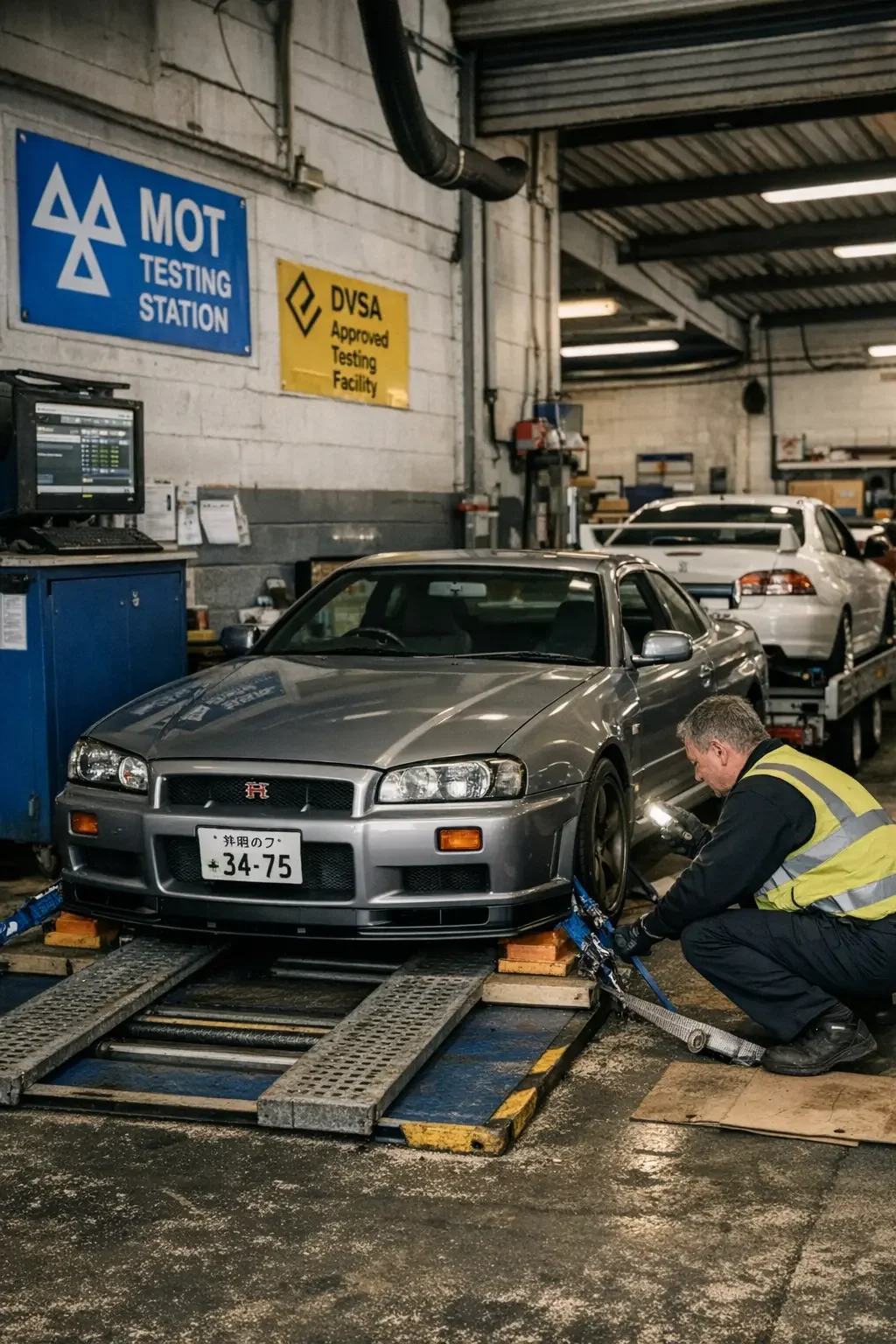
To register the car:
MOT test (even if exempt)
DVLA registration
Number plates
Insurance
This stage usually takes 1–3 weeks depending on DVLA processing times.
🏡 13. Step 11 — Delivery to Your Address
You can:
Collect from port
Use a delivery partner
Have it transported on a trailer
Most clients choose delivery for convenience.
💷 14. Full Cost Breakdown (Example)
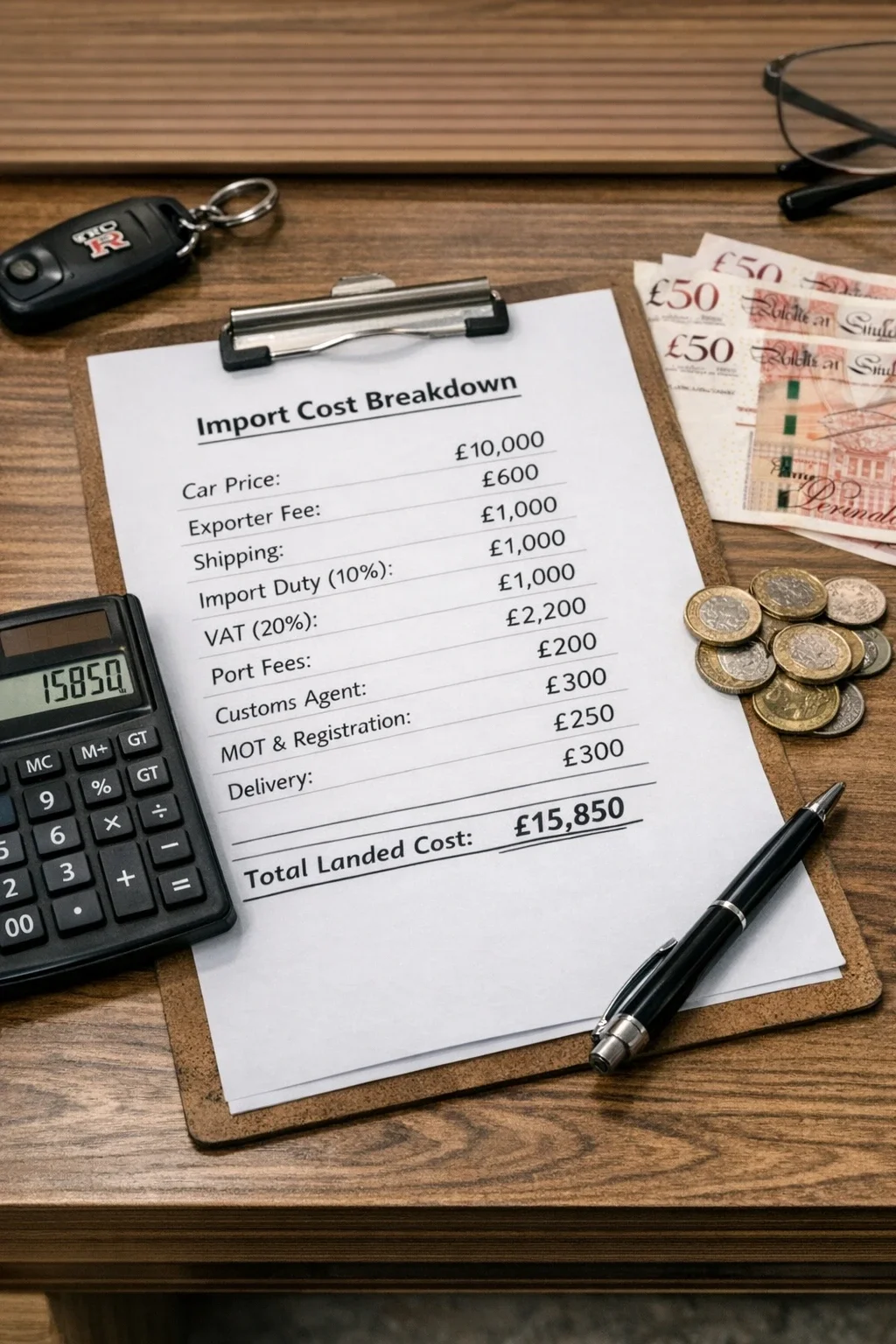
Here’s a realistic example for a £10,000 car:
Car price: £10,000
Exporter fee: £500–£800
Shipping: £900–£1,200
Duty (10%): £1,000
VAT (20%): £2,200
Port fees: £150–£250
Customs agent: £200–£350
MOT + registration: £150–£300
Delivery: £200–£500
Total UK landed cost:£15,100 – £16,600
⚠️ 15. Common Mistakes to Avoid
Buying from auctions without expert help
Auction sheets hide more than they reveal.
Ignoring underside photos
Rust repairs can cost more than the car.
Not budgeting for duty & VAT
Many first‑time importers underestimate this.
Using unknown exporters
Scams are common — always use vetted partners.
Expecting UK‑level customer service
Japan works differently — patience is essential.
🧭 16. How Touge Imports Helps
Touge Imports acts as a sourcing intermediary, providing:
Curated shortlists
Honest condition breakdowns
Auction sheet translations
Risk assessments
Guidance through the entire process
We do not buy, hold, or store vehicles. All payments go directly to the exporter for full transparency.
🎯 17. Final Thoughts — Is It Worth It?
If you want:
A rust‑free example
Better condition
Rare models
Transparent history
Long‑term value
Then importing from Japan is absolutely worth it.
The process is straightforward when you have the right guidance — and this guide gives you everything you need to start confidently.